
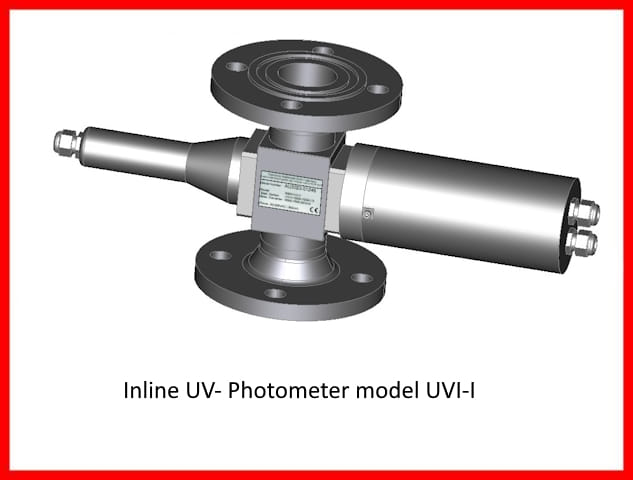
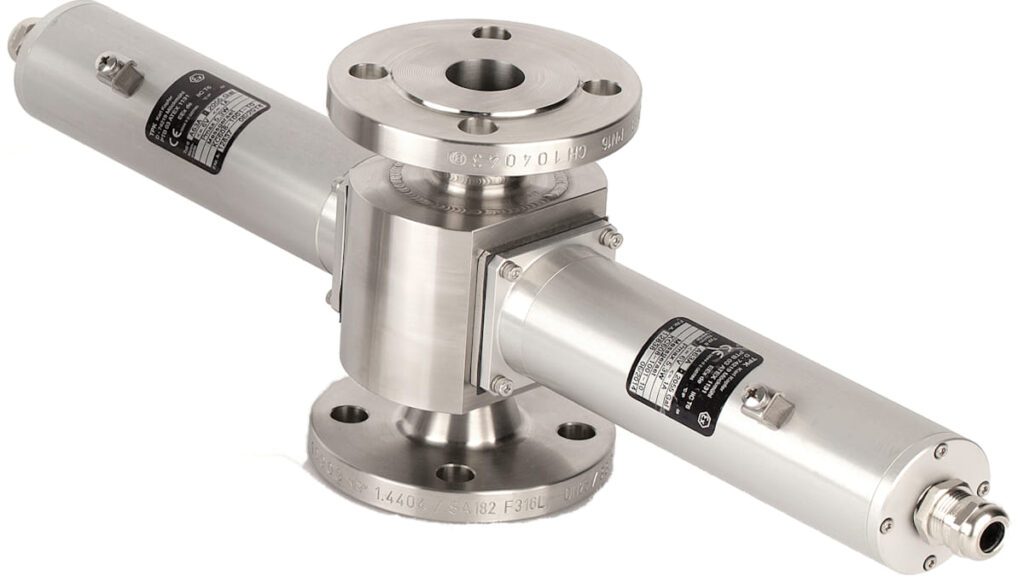
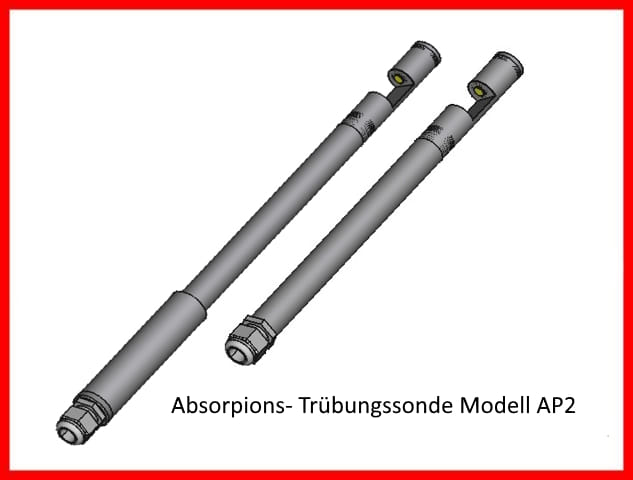
Stainless steel as a sensor material, also known as Nirosta, is a colloquial term for rust- and acid-resistant steel. This steel is characterised by a chromium content of at least 10.5 to 13 percent, which must be dissolved in the austenitic or ferritic solid solution.
The effect is based on the fact that this high chromium content forms a protective, dense passive layer of chromium oxide on the material surface. Further alloying elements such as nickel, molybdenum, manganese and niobium lead to even better corrosion resistance or more favourable mechanical properties. Since chromium is generally cheaper than nickel as an alloying element, a higher chromium content with a lower nickel content (assuming the same corrosion resistance) is preferred.
Under certain conditions, e.g. in the chlorine-laden air of indoor swimming pools or in offshore environments, stainless steel can show considerable signs of corrosion (stress corrosion cracking). Here, the right choice of material (composition of the alloy) is of decisive importance. Resistance in chloride-containing media is usually achieved by adding at least 2 percent molybdenum (e.g. X2CrNiMnMoNbN25-18-5-4). Stainless steel such as X5CrNi18-8 is not resistant to certain acids, such as hydrochloric acid (34 %).
The metal dissolves completely over time. Since the patent for steels with “high resistance to corrosion” was granted to Friedrich Krupp AG in Essen in 1912, the production of stainless steel has grown enormously.
The trigger for the development of such a steel was the rising chemical industry in the German Empire. The synthesis processes of the time, involving superheated steam, acidic media and very high temperatures, made conventional steels brittle (hydrogen embrittlement) and caused them to crack. To avoid these drawbacks, many reactors of that era had until then been made of granite.
Ammonia synthesis (Haber-Bosch process), which started in 1913, could only be realised through the use of austenitic CrNi steels such as those Krupp had developed a year earlier. The parallel development of the steel and chemical industries, and of these two events in particular, was therefore no coincidence.
Although most stainless steels are very difficult to machine, their use as a sensor material offers predominantly advantages. In addition to hygienic aspects, these include the longevity of the manufactured parts and environmental benefits. A disadvantage compared to other steels, however, is their usually low tensile strength and frequent lack of hardenability.
Also noteworthy is their lower antibacterial effect compared to copper and its alloys. See a US test result on this, also known as the oligodynamic effect. Further advantages are the UHV tightness of welded joints and low magnetism. For tools and knives, however, hardenable martensitic-ferritic steels are used, which often contain vanadium and molybdenum in addition to chromium and are magnetic. Typical steel grades for this are X30Cr13 and the higher-quality alloy X50CrMoV15 (cf. knife steel).
Ferritic-austenitic duplex steels, e.g. 1.4462 (X2CrNiMoN22-5-3), are also used in offshore applications. Instead of nickel, the cheaper manganese can also be used as an alloying element for austenitic steels, but the overall quality of these steels is lower. For offshore applications, components made of the special material X2CrNiMoN17-13-5 (material number 1.4439/Alloy 317 LN) are preferable. Screw materials made of stainless steels and their designations are standardised in EN ISO 3506.
When replacing screws made of conventional material with stainless steel screws, it must be noted that the material properties (tensile strength, elongation at break, yield strength, etc.) of these stainless steel screws are usually below those of conventional screws of property class 5.6 or higher. A simple 1:1 replacement must be checked carefully, especially for safety-relevant connections.
International Organization for Standardization: ISO on the internet
German Institute for Standardization (DIN e. V.): DIN/EN on the internet
Corrosion resistance decreases with increasing carbon content, because chromium has a high affinity for carbon and hard, brittle chromium carbide forms predominantly at the grain boundaries at the expense of protective chromium oxide. In addition, the steels then tend towards intergranular corrosion. To counteract this effect and thereby also improve weldability, the carbon content is kept low and the corresponding steel grades are additionally stabilised by adding niobium or titanium (which have a higher affinity for carbon than chromium).
Overview of Material Designations
The table lists the common stainless and acid-resistant steels.
Assignment of EN material numbers to the corresponding ASTM/AISI and UNS designations.
| EN Standard Material No. | EN Standard Short Name | ASTM/AISI | UNS |
|---|---|---|---|
| 1.4016 | X6Cr17 | 430 | – |
| 1.4512 | X2CrTi12 old: X6 CrTi 12 | 409 | – |
| 1.4310 | X10CrNi18-8 old: X12 CrNi17 7 | 301 | – |
| 1.4318 | X2CrNiN18-7 | 301LN | – |
| 1.4307 | X2CrNi18-9 | 304L | S30403 |
| 1.4306 | X2CrNi19-11 | 304L | S30403 |
| 1.4311 | X2CrNiN18-10 | 304LN | S30453 |
| 1.4301 | X5CrNi18-10 | 304 | S30400 |
| 1.4948 | X6CrNi18-11 | 304H | S30409 |
| 1.4303 | X4CrNi18-12 old: X5 CrNi18 12 | 305 | S30500 |
| 1.4541 | X6CrNiTi18-10 | 321 | S32100 |
| 1.4878 | X10CrNiTi18-10 old: X12 CrNiTi18 9 | 321H | S32109 |
| 1.4404 | X2CrNiMo17-12-2 | 316L | S31603 |
| 1.4401 | X5CrNiMo17-12-2 | 316 | S31600 |
| 1.4406 | X2CrNiMoN17-11-2 | 316LN | S31653 |
| 1.4432 | X2CrNiMo17-12-3 | 316L | S31603 |
| 1.4435 | X2CrNiMo18-14-3 | 316L | S31603 |
| 1.4436 | X3CrNiMo17-13-3 | 316 | S31600 |
| 1.4571 | X6CrNiMoTi17-12-2 | 316Ti | S31635 |
| 1.4429 | X2CrNiMoN17-13-3 | 316LN | S31653 |
| 1.4438 | X2CrNiMo18-15-4 | 317L | S31703 |
| 1.4539 | X1NiCrMoCu25-20-5 | 904L | N08904 |
| 1.4547 | X1CrNiMoCuN20-18-7 | S31254 | – |
HASTELLOY® Alloy C-22 – a versatile material for the chemical industry. HASTELLOY is a registered trade name of Cabot Corporation, Boston, MA. HASTELLOY® alloy C-22 is based on a critical balance of the alloying elements chromium, molybdenum and tungsten.
This ratio provides optimum corrosion resistance in the Ni-Cr-Mo system against oxidising and non-oxidising acids as well as against pitting and crevice corrosion. Alloy C-22 also offers excellent thermal stability in welding processes with high heat input.
Applications of HASTELLOY alloy C-22 to date confirm that this material solves difficult corrosion problems in practice, even where other highly corrosion-resistant alloys fail. The alloy is used for the construction of pressure vessels operated in the temperature range between -196°C and 400°C. With regard to this application, mechanical properties and processing data have been determined. In its mechanical behaviour, Hastelloy alloy C-22 is comparable to the other C-type alloys.
The material has high toughness at low temperatures, even in the cold-formed state. It is easily weldable and is therefore frequently used as a sensor material for chloride-containing products.
In air, titanium forms an extremely stable protective oxide layer, which makes it corrosion-resistant in many media. Its high strength combined with a relatively low density is remarkable. Above a temperature of 400 °C, however, its strength properties decline rapidly. High-purity titanium is ductile.
At higher temperatures, it becomes brittle very quickly by absorbing oxygen, nitrogen and hydrogen. Also note the high reactivity of titanium with many media at elevated temperatures or pressures if the passive layer cannot withstand the chemical attack. In such cases the reaction rate can increase up to an explosion. In pure oxygen at 25 °C and 25 bar, titanium burns completely to titanium dioxide, starting from a fresh cut edge.
At temperatures above 880 °C it reacts with oxygen, and at temperatures from 550 °C with chlorine despite the passivation layer. Titanium also reacts (“burns”) with pure nitrogen, which must be taken into account whenever heat is generated, for example during machining. Titanium is resistant to dilute sulphuric acid, hydrochloric acid, chloride-containing solutions and most organic acids. Due to the risk of explosion, operating conditions must be strictly observed in applications involving chlorine gas.
Monel, also called Monel metal, after Ambrose Monel († 1921), is a nickel-copper alloy (approximately 65% nickel, 33% copper and 2% iron) with high tensile strength that is highly resistant to atmospheric corrosion, seawater and a wide range of acids and alkaline solutions.
The name Monel is a protected trademark of Special Metals Corporation, Huntington (West Virginia), USA.
The material is regarded as a forerunner of stainless steel. Monel is used in marine engineering, turbine construction, equipment for the chemical and hydrocarbon industries, valves, pumps and heat exchangers. It is remarkably stable against aggressive fluorine F2 (passivation of the Monel surface by fluorination) and is therefore used as a material for F2 storage vessels (pressure cylinders).
The surface finish of TFM™ PTFE is significantly improved compared to PTFE; in addition, the material can be welded using special methods, a result of the “shift towards thermoplastics”. TFM™ PTFE has improved cold flow, pore content and stretch void index. TFM™ PTFE can be blended with substances such as glass fibre, graphite and carbon (compounds). This can significantly change its properties, above all compressive strength, thermal expansion, electrical values and abrasion. Adding carbon, for example, lowers the electrical resistance of the material to such an extent that it can be used in potentially explosive areas without the risk of static charge.
PVDF was launched commercially in 1961 by Pennwalt Corp. under the brand name “Kynar”.
In 1969, Kawai discovered the piezoelectric effect of PVDF. Due to its good thermal and chemical resistance, PVDF is used as a lining for pipes or for exterior components. It is also used for seals, membranes and packaging films. It is further used in measurement technology, e.g. for coating measuring probes. Since the material exhibits strong piezoelectric effects, it is also used in microphones, hydrophones, loudspeakers and actuators.
PVDF also meets the criteria of the “3-A Sanitary Standards for Multiple-Use Plastic Materials Used as Product Contact Surfaces for Dairy Equipment, Serial No. 2000”. Growth of microorganisms on PVDF: a PVDF surface provides just as unfavourable a breeding ground for microorganisms as glass. This is the conclusion of a study commissioned by Solvay from the “Centre d‘Enseignement et de Recherches des Industries Alimentaires et Chimiques” (CERIA in Brussels). Due to these properties, PVDF is used in the food industry (e.g. in dairies), in the pharmaceutical industry (e.g. for sterilisable precision dosing pipettes) and in the ultrapure media sector of the semiconductor industry.
PVDF has remarkable resistance to most inorganic and organic acids, oxidising media, aliphatic and aromatic hydrocarbons, alcohols and halogenated solvents. It withstands halogens – especially bromine (but not fluorine) – and weak alkalis. It is degraded by fuming sulphuric acid, some strongly basic amines, concentrated and hot alkalis and alkali metals. In highly polar solvents such as acetone and ethyl acetate it swells, and it is slightly soluble in aprotic solvents such as dimethylformamide and dimethyl sulphoxide.
High-performance thermoplastic polymer with exceptional properties.
VICTREX PEEK polymer is an aromatic, semi-crystalline thermoplastic from the polyaryletherketone (PAEK) group. It can be processed with all common thermoplastic methods and is characterised by a combination of outstanding properties: excellent chemical resistance, excellent tribological, thermal, electrical and mechanical properties as well as dimensional stability.
Benefit from over 40 years of experience, field-proven measurement technology and personal advice. Together we will find the right solution for your application. Visit our contact page and tell us about your project for a non-binding quote.
You need to load content from reCAPTCHA to submit the form. Please note that doing so will share data with third-party providers.
More InformationYou need to load content from Turnstile to submit the form. Please note that doing so will share data with third-party providers.
More InformationYou are currently viewing a placeholder content from Vimeo. To access the actual content, click the button below. Please note that doing so will share data with third-party providers.
More InformationYou are currently viewing a placeholder content from YouTube. To access the actual content, click the button below. Please note that doing so will share data with third-party providers.
More InformationYou need to load content from reCAPTCHA to submit the form. Please note that doing so will share data with third-party providers.
More Information